
 Author: Daniel G. Teleoaca – Maritime Chief Engineer
The International Maritime Organization (IMO) continues to strengthen environmental standards for international shipping. The latest amendments — adopted as Resolution MEPC.405(83) in April 2025 during the 83rd session of the Marine Environment Protection Committee (MEPC) — bring significant changes to the Guidelines for the Development of the Inventory of Hazardous Materials (IHMs).
What Are IHMs and Why Do They Matter?
The Inventory of Hazardous Materials (IHM) is a vital document required under the Hong Kong International Convention for the Safe and Environmentally Sound Recycling of Ships.
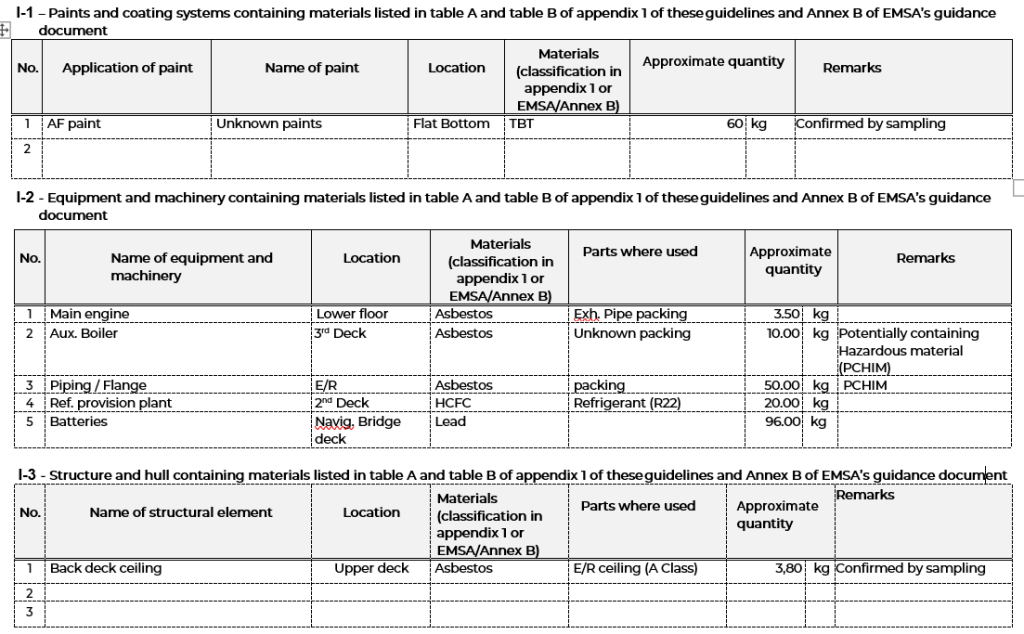
The IHM’s primary purpose is to ensure the safe and environmentally sound recycling of ships at the end of their operational lives. However, it also serves a crucial role throughout a vessel’s entire lifecycle by:
Avoiding Penalties: Without a valid and up-to-date IHM, a vessel can face significant consequences, including fines, detention at ports, or even being denied entry to ports in countries that enforce these regulations.
Protecting Human Health: It provides information to the crew and contractors, enabling them to handle dangerous substances like asbestos, heavy metals, and PCBs safely during maintenance, repairs, and operations.
Ensuring Regulatory Compliance: The IHM is a mandatory requirement for compliance with key international and regional regulations, most notably the Hong Kong International Convention for the Safe and Environmentally Sound Recycling of Ships and the EU Ship Recycling Regulation (EU SRR). These regulations apply to most commercial vessels over 500 gross tonnage.
The IHM is a “living document” that must be maintained and updated throughout the ship’s life. It is typically composed of three parts:
- Part I: Hazardous materials in the ship’s structure and equipment (e.g., asbestos in insulation, lead in paint).
- Part II: Operationally generated waste (e.g., oil residues, chemical sludge).
- Part III: Stores and consumables that may contain hazardous materials.
Key Amendments under MEPC.405(83)
1. Tighter Thresholds for Cybutryne in Anti-Fouling Systems
One headline change is the reduced allowable threshold for cybutryne—a harmful biocide formerly found in some anti-fouling paints. The new limit is set significantly lower, demanding careful scrutiny by shipowners and suppliers when updating or developing new IHMs.
2. Administrative & Documentary Updates
- Material Declarations (MDs): From 26 June 2025 onward, MDs for ship materials and equipment must use a new, updated format in line with the revised guidelines. This applies both to existing vessels maintaining their IHMs and new ships under construction.
- Revised IHM Maintenance Procedures: All procedures and documentation handling must reflect the new guidelines to guarantee continued compliance during surveys and inspections.
3. Impact on Shipowners, Shipyards, and Suppliers
- Shipowners need to ensure all MDs and IHM records conform to the new requirements from the effective date.
- Suppliers and manufacturers are required to adapt their documentation processes and provide MDs in the new format for any submissions on or after 26 June 2025.
- Shipyards must request and use the updated MDs during vessel construction and refits for compliance with the revised IHM framework.
Why Were These Changes Necessary?
These updates reflect the IMO’s ongoing commitment to minimizing environmental harm from shipping activities and to address advances in scientific understanding of hazardous substances. The lower threshold for cybutryne responds to growing concerns and regulatory moves to restrict this substance due to its environmental and ecological risks.
Timeline of Application
- Adoption: April 2025 (MEPC 83rd Session)
- Mandatory Application: No later than 26 June 2025 for all newly prepared or updated MDs and maintenance procedures.
Practical Steps for Compliance
1. Existing Ships:
Review and revise IHM Part I maintenance procedures. Update all future MDs using the new template. Ensure surveys reflect the amended requirements.
2. New Ships:
Begin using the revised IHM development process and request all suppliers to submit new-format Material Declarations for all relevant components and materials.
3. Suppliers & Shipyards:
Switch internal systems and documentation templates to the revised format before June 2025 to avoid compliance delays.
4. Digital Tools:
Industry platforms and software (e.g., PrimeShip-GREEN/SRM) have released updates to support these amendments, making compliance smoother for users.
In conclusion, the amendments brought by IMO Resolution MEPC.405(83) are part of the industry’s ongoing path toward safer, greener shipping. Shipowners, managers, suppliers, and shipyards must proactively adopt the revised IHM guidelines, ensuring all processes are fully compliant before the June 2025 deadline. By understanding and implementing these changes now, stakeholders will position themselves for smooth audits, fewer operational disruptions, and alignment with global best practices.
Chief Engineer’s Log encourages all maritime professionals to audit their current IHM and MD procedures now to guarantee seamless compliance ahead of the new enforcement date. For further technical guidance, always consult official IMO resources and your classification society’s advisories.


