
The marine industry is evolving rapidly in 2025, propelled by technological advancements, environmental regulation, and economic pressures. At the heart of modern marine propulsion lies the fuel injection system—a critical component that profoundly influences engine efficiency, power output, fuel consumption, and emission control.
Advanced fuel injection technologies have emerged as pivotal enablers enabling ships to meet stringent IMO emission standards, reduce greenhouse gases, and optimize operational costs. This article comprehensively explores these advanced injection systems, analyzing the latest trends, engineering challenges, and practical implications for marine engineers and operators.
Read more about Diesel Injection System in HERE.
The Critical Role of Fuel Injection in Marine Engines
Fuel injection governs the delivery and atomization of fuel into the combustion chamber, determining combustion quality, thermal efficiency, and emissions. Precise control over injection timing, quantity, and spray pattern translates directly into:
- Improved fuel-air mixing resulting in more complete combustion
- Reduced unburned hydrocarbons and particulate matter emissions
- Controlled peak combustion temperatures lowering NOx formation
- Adaptive fuel delivery optimizing engine response at varying loads
Consequently, innovations in injection technology stand central in shaping the performance and environmental footprint of marine engines.
Evolution of Marine Fuel Injection Systems
Marine engine fuel injection has seen significant technological evolution:
- Mechanical Injection: The traditional setup driven by camshafts, offering robustness but limited control over injection timing and pressure.
- Hydraulic Electronic Unit Injection (HEUI): Combining hydraulic actuation with electronic control for improved timing and quantity but complex hydraulics.
- Common Rail Injection (CRI): High-pressure rail feeds electronically controlled injectors, providing precise injection timing and multiple injection events per cycle.
- Electronically Controlled Unit Injectors (EUIs): Integrating electronic solenoids with traditional pumps to balance mechanical robustness and electronic control.
By 2025, common rail systems with advanced electronic controls dominate modern marine engines, especially on newbuilds, due to their superior efficiency and emissions performance.
Read and learn more about Common Rail System in HERE.
Key Features of Advanced Fuel Injection Systems in 2025
1. High-Pressure, Variable Injection
Modern marine common rail systems operate at extremely high pressures (up to 2500 bar), enabling fine atomization of fuel into ultra-small droplets. This rapid vaporization increases the fuel-air mixing surface area, promoting more efficient combustion.
Variable injection pressure and timing tailored to load and engine speed conditions optimize combustion dynamics continuously throughout operation.
2. Multiple Injection Events per Cycle
Instead of a single injection event, advanced systems utilize multiple injections:
- Pilot Injection: Small initial fuel doses soften pressure rise reducing engine noise and mechanical stress.
- Main Injection: Primary fuel delivery providing power.
- Post Injection: Tail-end injection assisting in oxidation of particulates, aiding emission control, and catalyst regeneration.
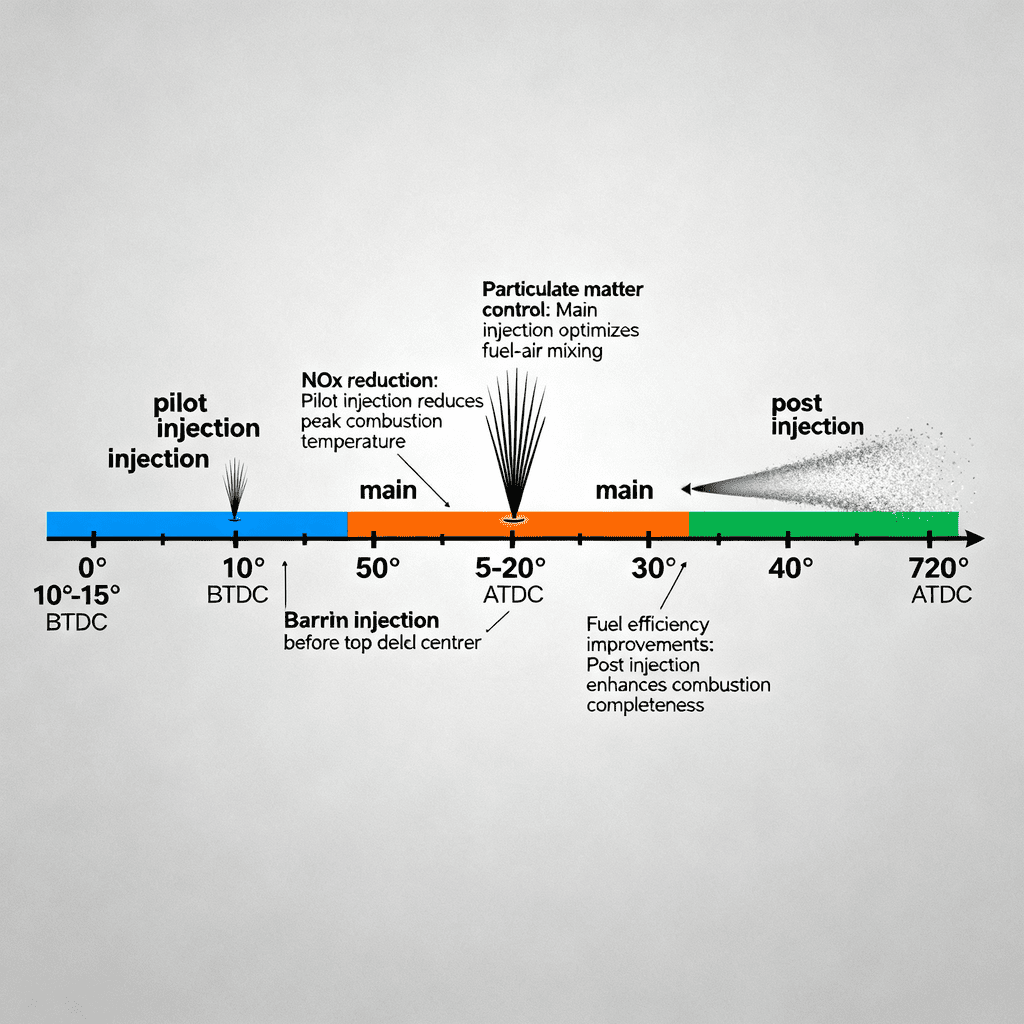
This multi-event injection strategy lowers particulates, NOx emissions, and improves fuel economy.
3. Closed-Loop Feedback and ECU Control
Electronic Control Units (ECUs) receive real-time sensor data—such as crankshaft position, exhaust gas oxygen content, and in-cylinder pressure—to fine-tune injection parameters dynamically.
Closed-loop control enables rapid adjustments compensating for fuel quality variations, engine wear, and operating profile changes, maintaining optimal combustion conditions.
4. Injector Technology and Materials
Advanced injectors incorporate piezoelectric or solenoid actuators for rapid, precise nozzle opening and closing.
Read more about Marine Injector Valves in HERE.
Materials resistant to high pressure, temperature, and corrosive fuels extend injector lifespan and reliability under marine conditions.
Enhancing Engine Efficiency through Advanced Injection
The direct impact of these advanced fuel injection features on engine efficiency is profound:
- Improved Combustion Efficiency: The optimized fuel spray patterns and timing extract maximum energy from fuel.
- Lower Specific Fuel Consumption (SFC): Precise metering avoids overfueling and reduces wasted fuel.
- Adaptability to Alternative Fuels: Electronic injection systems can adjust parameters to handle LNG, methanol, or biofuels with different combustion characteristics.
Fuel Atomization Effect Simulation
Vessels equipped with cutting-edge injection systems report fuel savings of 3-8% compared to legacy systems, delivering significant cost benefits.
Emission Control Advancements Enabled by Injection Systems
Marine fuel injection directly influences emission profiles:
- NOx Reduction: Pilot and multiple injections moderate combustion temperatures, reducing thermal NOx formation.
- Particulate Matter (PM) Control: Post injection events help oxidize soot particles, facilitating catalytic converter efficiency.
- Sulfur Emission Management: Injection timing and pressure adjustments minimize sulfur compound formation during combustion of higher sulfur fuels.
Integrated with after-treatment technologies like SCR and DPF (Diesel Particulate Filters), injection systems are crucial in meeting IMO Tier III and upcoming Tier IV standards.
Learn more about Selective Catalytic Reduction (SCR) in HERE.
Challenges and Engineering Considerations
While advanced fuel injection systems bring benefits, they pose challenges:
- Complexity and Cost: High-precision components and electronics increase initial cost and require specialized maintenance skills.
- Fuel Quality Sensitivity: Contaminants and inconsistent fuel properties demand robust filtration and conditioning systems.
- Reliability in Harsh Environments: Marine conditions require rugged design to withstand vibration, salt corrosion, and thermal cycling.
- Compatibility with Alternative Fuels: Ensuring system components resist the chemical properties of new fuel types necessitates material innovations.
Engineering teams must balance performance goals with operational realities in system design and maintenance planning.
Practical Recommendations for Marine Engineers
Regular Calibration and Testing: Frequent injector calibration and functionality checks using diagnostic tools maintain system precision.
Learn on How to Check Fuel Injector Valve Condition in HERE.
- Fuel Quality Monitoring: Employ rigorous bunkering inspection, fuel polishing, and water separation systems to protect injectors.
- Proactive Maintenance: Scheduled replacements and cleaning avert injector fouling and nozzle damage.
- Crew Training: Continuous education on system operation, fault diagnosis, and fuel management optimizes performance.
- Leverage Digital Monitoring: Integrate injection system data with digital engine monitoring platforms for real-time performance insights.
Future Trends: Moving Towards Smarter Injection Systems
Emerging trends augur even more sophisticated injection control:
- AI-Driven Injection Optimization: Machine learning algorithms analyzing vast operational datasets to recommend adaptive injection profiles.
- Integrated Engine-Digital Twins: Virtual replicas allow simulation of injection scenarios improving predictive maintenance and tuning.
- Electrification and Hybrid Systems: Fuel injection evolving alongside electric propulsion bringing new demands for precision and control synergy.
- Nano-material Injector Coatings: Reducing wear and enhancing resistance to deposits for longer injector lifespans.
Staying abreast of these trends will keep marine engineers at the leading edge of engine efficiency and emission control.
Mastering Advanced Fuel Injection for Sustainable, Efficient Shipping
Advanced fuel injection systems are foundational to the modern marine engine’s ability to deliver improved fuel economy, meet rigorous environmental standards, and adapt to new fuel technologies in 2025. For marine engineers and operators, deep understanding, diligent maintenance, and technological adoption of these systems provide competitive operational advantages and comply with the global drive toward sustainable shipping.
Subscribe to ChiefEngineerLog.com to access exclusive content, practical guides, and expert insights designed to empower maritime professionals in mastering cutting-edge marine engineering.


