
As IMO Tier III emission regulations continue to enforce stringent nitrogen oxide (NOx) limits in designated Emission Control Areas (ECAs), marine vessels worldwide increasingly depend on Selective Catalytic Reduction (SCR) systems to meet compliance. SCR technology is at the forefront of reducing harmful engine emissions, yet its complex operation requires expert understanding, vigilant maintenance, and efficient troubleshooting to sustain optimal performance.
This article offers an in-depth exploration of marine SCR systems, focusing on practical troubleshooting techniques essential for marine engineers aiming to maximize emission control efficiency and minimize downtime in 2025.
Understanding Marine SCR Systems: The Basics
Selective Catalytic Reduction (SCR) is an advanced exhaust gas after-treatment technology that chemically transforms NOx gases into nitrogen and water vapor, significantly reducing the environmental impact of marine diesel engines.
How SCR Works:
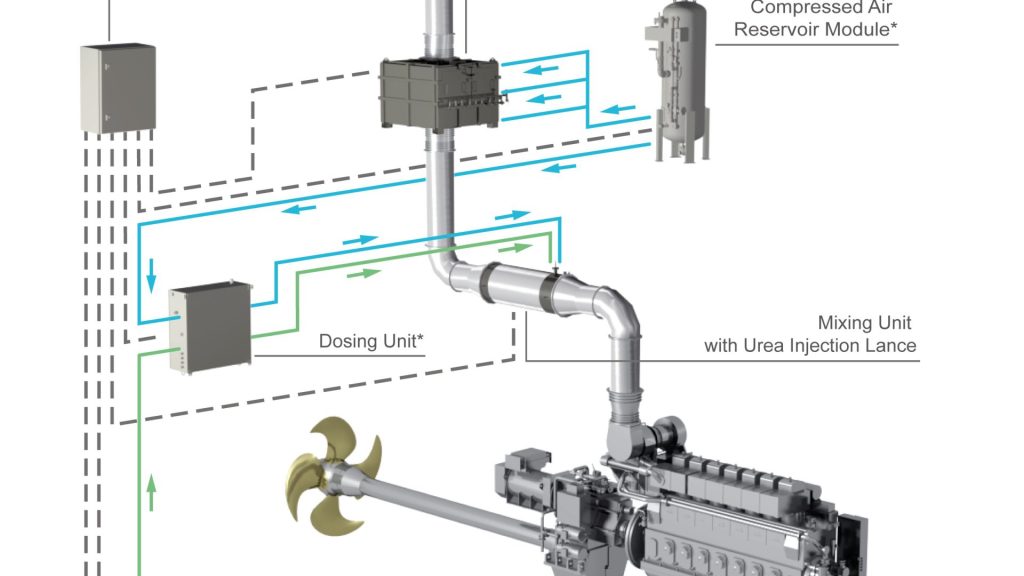
- Reagent Injection: A urea-based reagent solution (commonly Diesel Exhaust Fluid [DEF]) is injected into the exhaust gas stream upstream of a catalyst.
- Catalytic Reaction: Within the SCR catalyst, the reagent chemically converts NOx gases to harmless nitrogen (N₂) and water (H₂O).
- Emission Reduction: Properly operating SCR systems can reduce NOx emissions by up to 90%, enabling vessels to meet or exceed IMO Tier III requirements.
Pros:
- Reduces NOx by over 90% when maintained properly
- No penalty on fuel efficiency; may slightly improve it
- Retrofit-compatible for many marine engine types
Cons:
- Sensitive to fuel quality, exhaust temperature, and reagent purity
- Maintenance-intensive: catalyst, sensors, injectors require regular attention
Read and learn more about Selective Catalytic Reduction (SCR) in HERE.
Common SCR Problems and Real-World Causes
- Fouling and Blockage
Read and learn how to tackle with SCR fouling in HERE.
- Ammonia Slip and Crystallization

- Reagent Supply and Quality Issues
- Injector Malfunctions
- Sensor and Software Failures

Step-by-Step Troubleshooting & Actionable Recommendations
1. Track and Maintain Exhaust Temperatures
- Best Practice: Keep exhaust temperature in the optimum range (usually 250–450°C) for full urea conversion and catalyst activity.
- Action: If running low load for extended periods, perform periodic “burn-off” cycles (increase load) or use exhaust gas heating devices to prevent low-temp fouling.
2. Monitor Reagent Quality and Level
- Best Practice: Always use certified, fresh 32.5% urea (DEF/AdBlue) and monitor for contamination.
- Action: Regularly inspect DEF tanks for dirt, algae, or crystals. Avoid exposing DEF to sunlight/extreme cold, as quality degrades.
3. Inspect and Clean Injectors
- Best Practice: Periodically remove, inspect, and (if needed) clean the urea injectors using recommended cleaning agents/ultrasonic baths.
- Action: Replace injectors with abnormal spray if cleaning does not restore performance.
4. Catalyst Care and Cleaning
- Best Practice: Schedule regular catalyst differential pressure and NOx conversion checks.
- Action: Clean catalyst units using air blast or ultrasonic methods if fouling is detected*; replace when conversion falls below 80% or as per OEM specs.
5. Continuous Sensor and Software Diagnostics
- Best Practice: Regularly calibrate NOx and NH₃ sensors using test gases, and inspect wiring for corrosion or loose connections.
- Action: Update SCR control software/firmware as provided by manufacturers for improved dosing algorithms and compatibility.
6. Preventive Upstream Maintenance
- Best Practice: Monitor engine combustion quality and lube oil carryover; address upstream oil leaks and maintain exhaust system seals.
- Action: Install particulate filters or cyclone separators before the SCR when possible to reduce ash/soot load on catalyst.
7. Record-Keeping and Proactive Monitoring
- Best Practice: Keep digital logs of all preventive and corrective actions, and monitor trends in catalyst performance, NOx conversion, and urea usage over time.
- Action: Use modern digital monitoring tools with predictive maintenance analytics to detect emerging issues before failure.
Decision-Making Guide: SCR Troubleshooting Scenarios
| Problem | Symptom(s) | Priority Action | Preventive Step |
|---|---|---|---|
| Low NOx removal | High NOx after SCR | Check temp, catalyst, DEF quality | Maintain exhaust temp, catalyst |
| Ammonia slip, crystals | White deposits, NH₃ alarm | Review dosing, temp, urea quality | Calibrate dosing, raise temps |
| Erratic sensor readings | Fluctuating system data | Calibrate/replace sensor, check wiring | Periodic sensor calibration |
| Injector clog | Persistent high NOx/slip | Clean/replace injector | Filter DEF, regular inspection |
| Unexpected shutdown | Control alarm, system offline | Diagnostics/reset, call OEM | Update SW, test redundancy |
Pros and Cons: SCR vs. EGR for Tier III Compliance
| Feature | SCR System | EGR System |
|---|---|---|
| NOx reduction | 90%+ (very high) | 70–80% |
| Retrofitability | Good (new and older engines) | Limited (mainly new builds) |
| OPEX impact | Requires DEF/urea supply/logistics | Increases soot & maintenance |
| Emission control | No fuel penalty, possible savings | Can slightly increase CO₂ |
| Complexity | Catalyst/urea handling required | Demands more cooling, clog risk |
Advanced Tips for Extended Performance and Compliance
- Upgrade catalysts to new “low-load optimized” designs for vessels with frequent maneuvering or low-speed operation.
- Install ammonia slip sensors and feedback-controlled dosing for precise reagent management.
- Arrange for training sessions with SCR manufacturers to keep crew skills up to date and review new troubleshooting protocols
Consistent, strategic troubleshooting and maintenance of SCR systems are vital for sustainable, compliant, and efficient ship operations under IMO Tier III standards. By following the actionable recommendations above and adopting a proactive monitoring culture, marine engineers can minimize downtime, extend catalyst life, and keep emissions in check—protecting both the vessel’s bottom line and the environment.
Subscribe to ChiefEngineerLog.com for exclusive practical guides, troubleshooting checklists, and updates on the latest marine emission control technologies.
An interactive Marine SCR System Troubleshooting Checklist is available for Subscribers on their dedicated page.


